From a decade of careful research, to a fast-moving company with pilot programmes across Europe.
Nearly half of serious congenital conditions are not detected before birth. This leaves families without answers and clinicians managing uncertainty under pressure. Fraiya builds on over a decade of research from King’s College London and Guy’s and St Thomas’ Hospital. Across three completed clinical studies involving 47,000+ patients, this work demonstrated how AI can safely support fetal ultrasound in real clinical settings. Fraiya Ltd was incorporated in 2024 to translate that evidence into practice, responsibly, and at pace.
10+
Years of Research
40 000+
Patients involved in Fraiya Studies
£15M+
Funding
2
Patents Granted, 1 Pending
2014-ongoing
iFIND Research Programme
The iFIND (Intelligent Fetal Imaging and Diagnosis) research programme was established in 2014 at King’s College London and Guy’s and St Thomas’ NHS Foundation Trust. Its aim was to understand how artificial intelligence could safely and meaningfully support fetal ultrasound in real clinical practice.
Over a decade, iFIND conducted large-scale clinical studies involving more than 40 000 patients, generating peer-reviewed evidence that now underpins Fraiya’s technology.
We believe that robust validation is essential to redefining standards in prenantal screening.
PROMETHEUS was a prospective randomised controlled trial run in an active maternity unit at Guy's and St Thomas' — real sonographers, real patients, real clinical conditions — published in NEJM AI in 2025.
It demonstrated 42% reduction in scan time, significantly lower cognitive load for sonographers, and AI biometry that outperformed human-to-human repeatability.1
Since incorporating in 2024, we've moved fast on every front that matters. Fraiya has received a CE mark an ISO 13485 certification.
2025-2027
NIHR i4i Clinical Trial
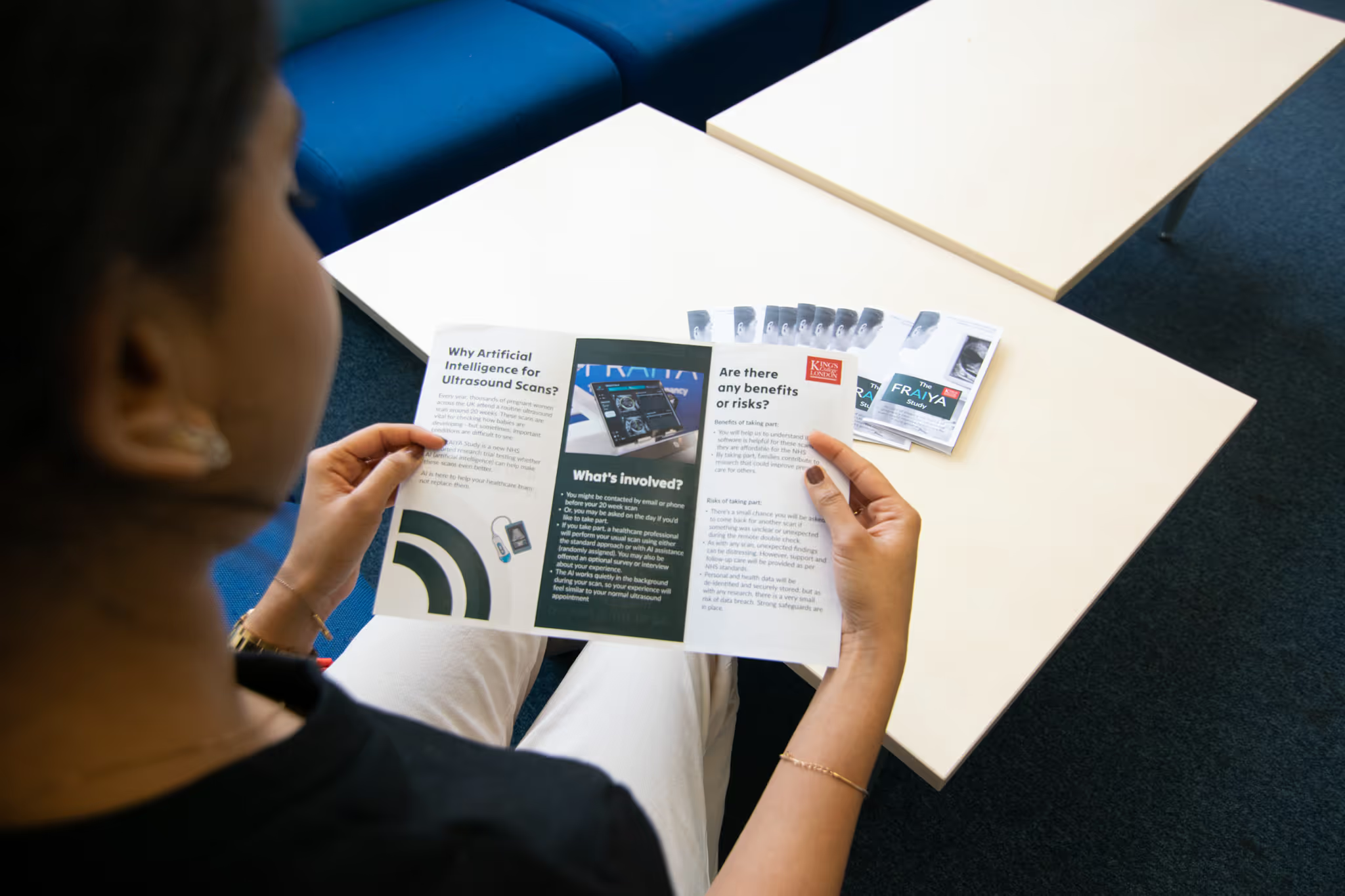
Funded by the National Institute for Health and Care Research — one of the most competitive translational research awards in UK health — this trial evaluates FraiyaScan and FraiyaDetect across multiple NHS Trusts simultaneously, involves 9,500+ patients , and includes a full health economics assessment.
“We see this trial as a turning point. It’s not just about proving our AI tools work, it’s about proving they add value to the health system”
- Reza Razavi, CEO
funding
Backed by World-leading institutions
Our work has been funded through some of the most competitive and carefully reviewed health research programmes in the UK and internationally. We are grateful to the institutions that supported this work long before outcomes were certain.
We'd love to hear from you
We welcome conversations with clinicians, researchers, and partners.



.png)